Families pick cruises because they put meals, activities, and sleep under one roof. That convenience only works if the cruise you choose matches your kids' ages, your tolerance for crowds, and your budget. This guide gives clear tradeoffs, practical examples, and a short checklist so you can narrow options fast and plan with confidence.
The simple rule of thumb
- Young children (infants to about 7 years) - prioritize predictable routines, short sailings, and lines with dependable early-evening programming. Nap-friendly cabin layouts and easy dining matter more than high-energy attractions.
- Elementary and tweens (about 8 to 12 years) - look for splash areas, family activities, and staffed kids clubs that let you hand over supervision for a few hours while kids try new things.
- Teens (about 13 to 18 years) - choose ships with teen-only spaces, late-night options, and active onboard features like surf simulators, climbing walls, or sports courts.
These are starting points, not rules carved in stone. Most families are a mix of ages, so focus on what will make the trip smooth for the majority of your children.
Match the line to your family
Disney Cruise Line
Best for families who want familiar characters, structured shows, and age-segmented kids clubs. Expect strong predictability and a family-first culture. Tradeoff: premium pricing and fewer adult-only spaces.
Royal Caribbean
Great for active families who want variety and high-energy features. Big ships mean more attractions, more dining choices, and flexible schedules. Tradeoff: larger ships can feel busy and may not be ideal if you prefer calm.
Carnival and Norwegian
Often more budget friendly. Carnival leans playful and casual. Norwegian offers flexible dining and a mid-size to large ship mix. Tradeoff: some activities or dining may be a la carte and add to overall spend.
Smaller or luxury lines
Choose these if you want calmer spaces, personalized service, or unique ports. Tradeoff: fewer kid-specific programs and typically higher prices.
Ship size and cabins that matter to the family experience
- Large ships give more onboard choices, which helps when different family members want different things. They are excellent when you want adults and kids to split up for parts of the day.
- Small ships feel calmer and visit ports larger ships skip, but they may have limited kids programming.
Cabin choices you should consider first:
- Interconnecting rooms - worth the premium if you need separate sleeping areas and want quick access to kids at night.
- Suites or two-bedroom options - ideal for longer sailings or multigenerational travel.
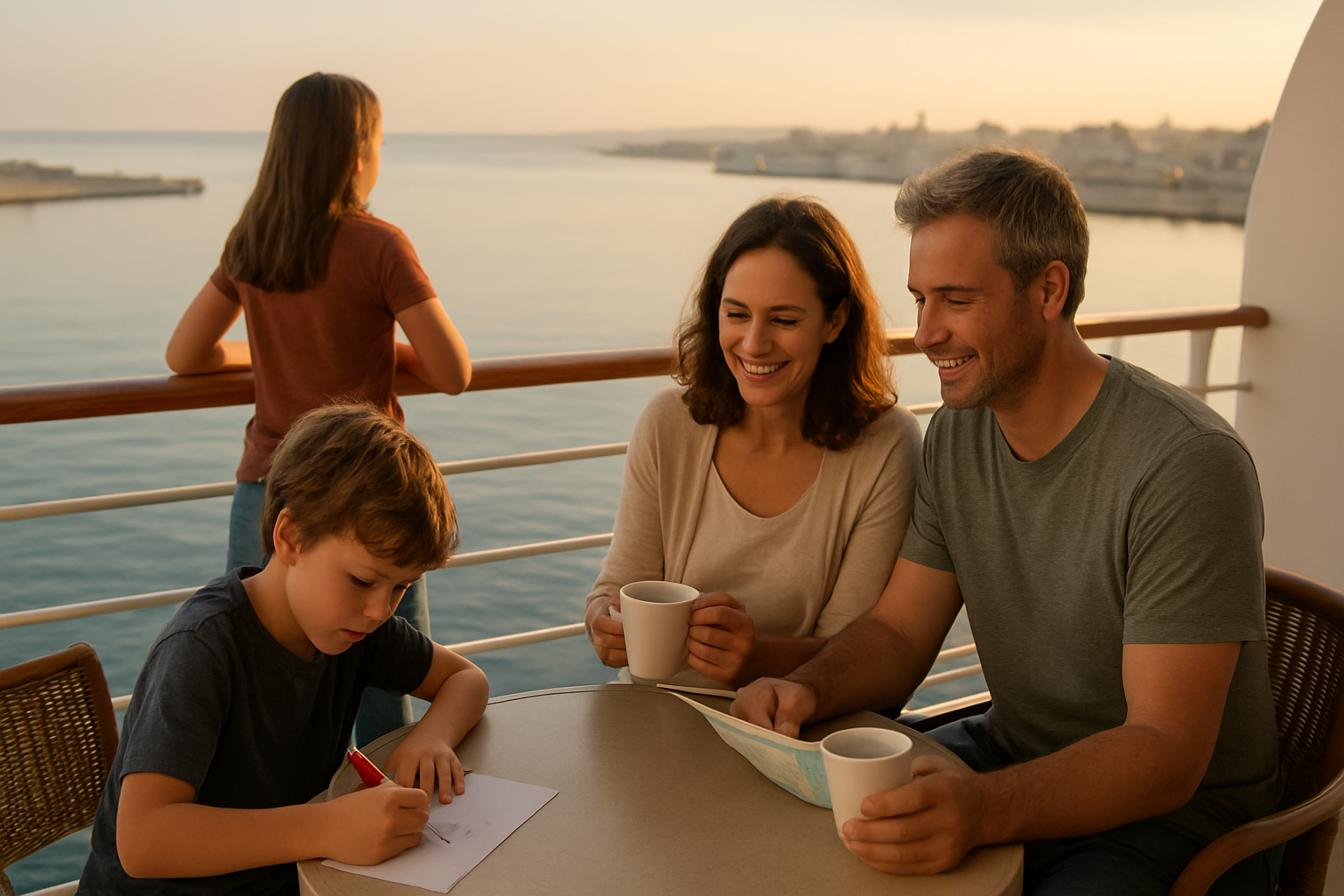
- Balcony cabins - give parents breathing room for morning coffee while kids sleep, and they are surprisingly useful for pacing the day.
Prioritize sleep logistics and bathroom access over extras like onboard credits. A good night's sleep reduces crankiness and makes the whole vacation feel longer.
Itineraries and timing families should know
- Short sailings (3 to 5 nights) - best for first cruises and very young children. Lower risk of a bad day turning the whole trip.
- Medium sailings (6 to 9 nights) - a common sweet spot that balances port time and onboard activities.
- Longer sailings - great if you want more ports or a slower pace, but add planned downtime days to avoid burnout.
Season notes: Caribbean is year-round friendly for warm-weather trips. Alaska has a compressed season and appeals to outdoorsy families. European itineraries often mean more travel days getting there, so weigh international flights against onboard days.
Kids clubs, babysitting, and carving out adult time
Ask these specific questions before you book:
- What are the exact age ranges and staff-to-child ratios?
- Which programs are included and which cost extra?
- How late do evening programs run, and is there supervised dinner time?
If regular date nights are a goal, either budget for babysitting or pick ships with included late-evening programming. For younger kids, look for structured drop-off times so you can plan confidently.
Budgeting and common extra costs
Don't assume the base fare covers everything. Plan for these common extras:
- Specialty dining and alcoholic beverages - can add $25 to $100 per person per meal or more.
- Shore excursions - $50 to $200 per person depending on activity.
- Gratuities and service fees - usually added per person per day.
- Wi-Fi packages and photo packages - often stacked costs for families.
Budgeting rule many families use: add 25 to 40 percent to the base fare for onboard and shore spending. Adjust the range up if you expect many excursions or specialty meals.
Practical 7-step planning checklist
- Decide your priority - activities, downtime, or budget. Let that guide all choices.
- Pick a cruise length that fits your kids' attention spans and travel time to the port.
- Choose a ship with kids clubs and adult spaces you will actually use.
- Book cabins to solve sleep logistics - interconnects, suites, or balconies are worth it for many families.
- Pre-enroll children in kids clubs and reserve specialty activities early when possible.
- Set a per-day spending limit and prepay packages when they save money.
- Pack a small medical kit, motion-sickness remedies, and a few favorite snacks for shore days.
Frequently asked questions
Is a cruise worth it with babies or toddlers? Yes, if you choose short sailings and a family-friendly line. Centralized meals and predictable spaces reduce packing and routine friction.
How do we reduce seasickness risk? Choose larger ships when possible, pick midship cabins lower on the ship for less motion, and bring over-the-counter medication or patches if needed.
Should we prebook shore excursions or hire private guides? Prebook popular excursions to avoid sellouts. Private guides give more flexibility with kids, but cost more. Match the choice to your family's comfort level and schedule.
Choosing the right family cruise comes down to matching what matters most - predictable routines, active options, or stretching the travel budget. If you'd like help narrowing down the right fit, we can help. Start at /plan and we will walk you through ship and itinerary options without pressure.